
By Deborah Corn
Deborah is the founder of the Print Media Centr (www.printmediacentr.com), providing strategy, intel, and insight for printing and marketing professionals and print enthusiasts around the world.
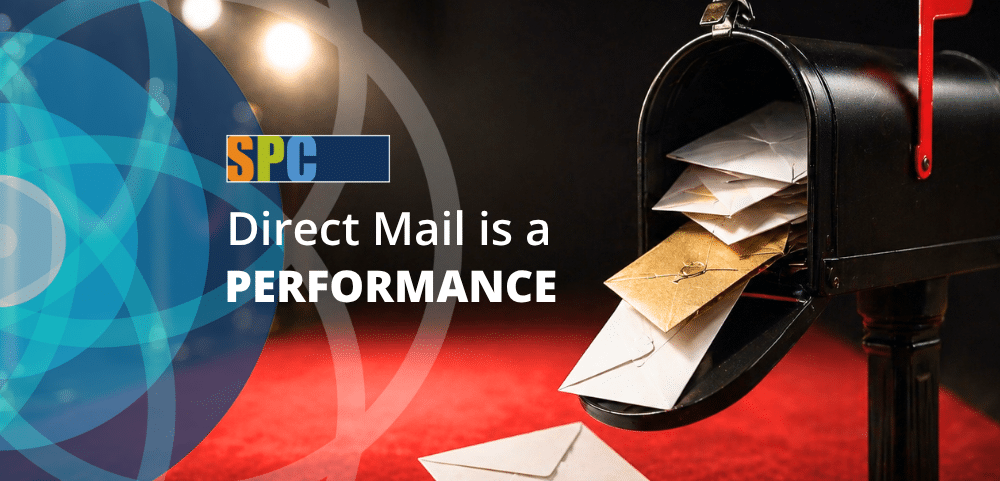
Every mailer can be an Oscar-worthy experience, not just a printed thing that shows up in a mailbox and ends up in a pile. The moment it is picked up becomes showtime, with the audience standing in their kitchen or sitting at their desk, deciding in seconds whether to give you their attention or move on.
There is a psychological reason those first seconds matter so much. It is known as the threshold effect. It describes the moment when someone crosses from one state of awareness into another, when distractions fall away and attention resets. On the other side of that threshold, people are more present and more open to what comes next.
We experience this constantly.
Think about walking into a movie theater. The lights dim, the previews roll, the movie begins, and the outside world disappears. You stop multitasking. You stop scanning. You are fully present and ready to receive the story. That shift does not happen by accident. The environment is designed to pull you in and hold you there.
Direct mail can create a threshold effect of its own.
When a strategically crafted mailing invites someone to touch it, unfold it, explore it, or notice a detail they did not expect, their attention resets. Curiosity takes over. The recipient moves from mail sorter to an engaged audience member. What happens next determines whether the performance earns applause or closes on opening night.
Thinking like a director, rather than just a sender, alters how mail is perceived. Directors concentrate on the audience’s experience at every moment. This same approach is relevant to direct mail.
As attention settles in, so does the audience. The goal is for engagement and focus to increase. The crafted direct mail performance is elevated from ‘junk’ into something worth spending time with. We have all received mailings overloaded with information. That is not a performance; it’s the snack bar menu with all the available options to choose from. A performance worth remembering pauses the reader and rewards them with something meaningful to them.
Printed materials are especially effective at creating threshold moments because they are physical. The act of unfolding a mailing, discovering an unexpected texture, or a gatefold opening wide and expanding into a larger story creates a mental shift, a threshold effect that signals this communication is different and worth staying with.
This is why materials matter. They set the stage for the performance.
Paper, format, and finishing reflect and carry the message forward. How a mailing comes together, including its size, folds, binding, panels, inserts, and how it opens or unfolds, along with how it moves and feels, all communicate meaning before a single word is read. When those choices do not align with the intention of the communication, the performance ends.
A sustainability message delivered on a heavily varnished, foil-stamped mailing sends mixed signals. A message about trust, care, or finances printed on flimsy stock undercuts its credibility. A premium offer that feels inexpensive loses impact before the message is absorbed. The audience knows something feels off immediately.
Weight, texture, coatings, varnishes, embossing, folds, and the way a mailing physically opens or expands influence the experience, like background music supporting a dramatic scene or an action sequence. These elements should be considered like set design. They set the stage and shape how the message is received and remembered.
When the materials support the intent of the communication, it builds trust, and trust leads to engagement, conversion, retention, and loyalty.
Direct mail earns applause when it respects the audience and uses its physical qualities with intention. When pacing, materials, and message are aligned, the performance does not need to prove itself. It works because the audience was ready to receive it, and the ROI may even earn a standing ovation.
To create an impressive mail campaign, you need fresh ideas and expert production skills. SPC’s award-winning Format Innovation Guide offers over 200 optimized formats that are designed to inspire and capture attention. Reach out to your SPC rep for creative strategies to transform your mail campaign into an engaging performance that captures attention and encourages recipients to take action.